
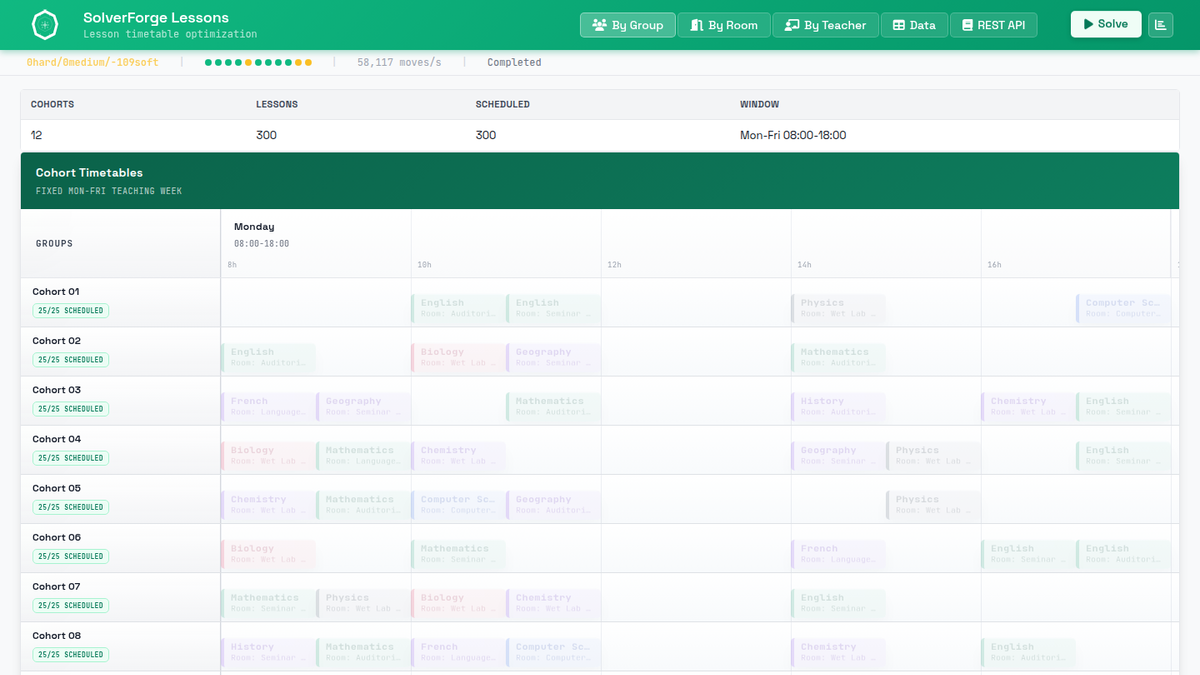
Lesson Timetabling (Rust)
Places each lesson in a timeslot and room for its teachers and student groups
These demos exist because some systems are easier to understand once you can touch them. Scheduling, routing, and allocation work becomes far more legible when you can see the constraints, inputs, and outcomes in motion.
I like demos that do more than decorate a project. The good ones reveal how a system thinks.
A strong first example if you want to understand how planning systems behave under operational constraints.
A better example when the interesting part is sequencing, geography, capacity, and combinatorial complexity.
Useful if you want to see the work extend beyond classic workforce or logistics scenarios.
Some demos are newer and closer to the current technical direction. Others are older, but still useful because they show continuity: the same kinds of problems, explored across different implementations and stages of maturity.
If you are evaluating the work, pay attention to the domains, the decisions exposed in the UI, and the way each demo makes a hard problem understandable.
Places each lesson in a timeslot and room for its teachers and student groups
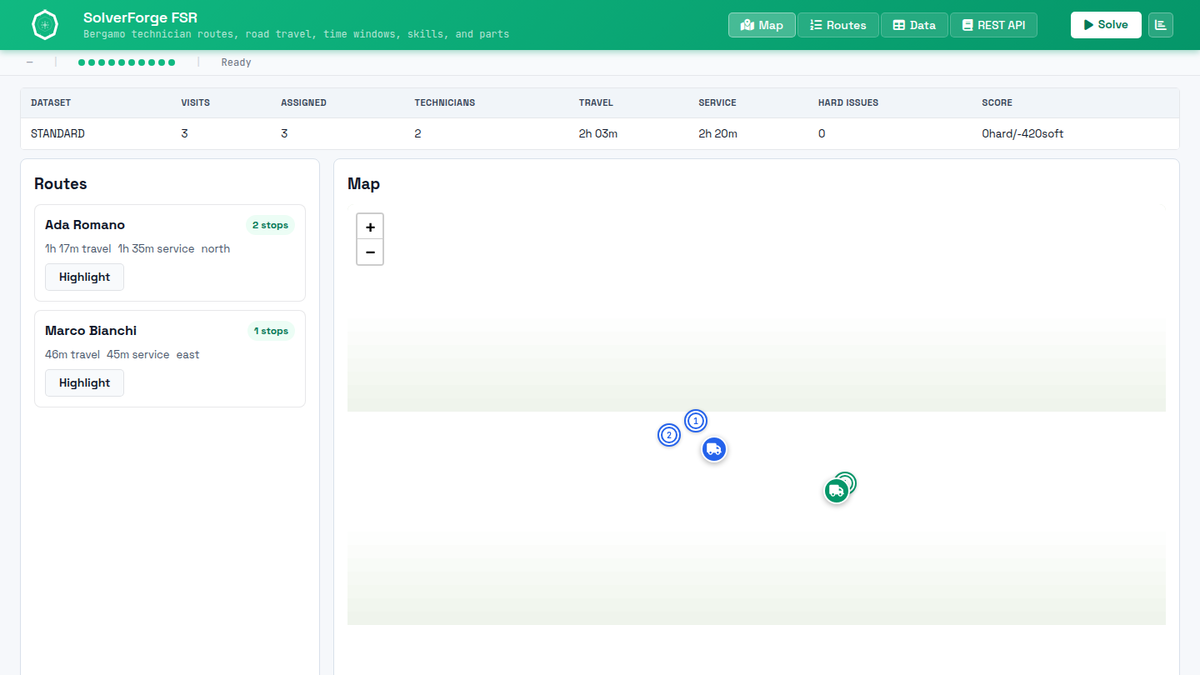
Assigns service visits to technicians by skills, parts, shifts and territory, routed over the road network
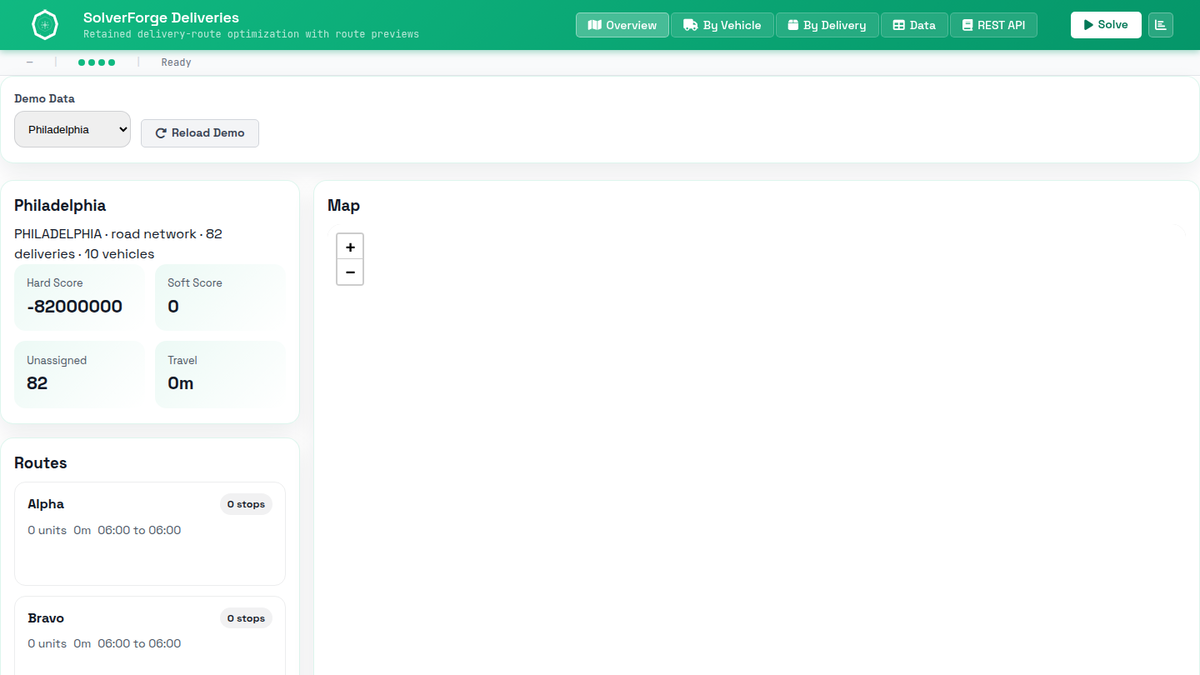
Assigns delivery stops to vehicles and orders each route under capacity and time-window constraints
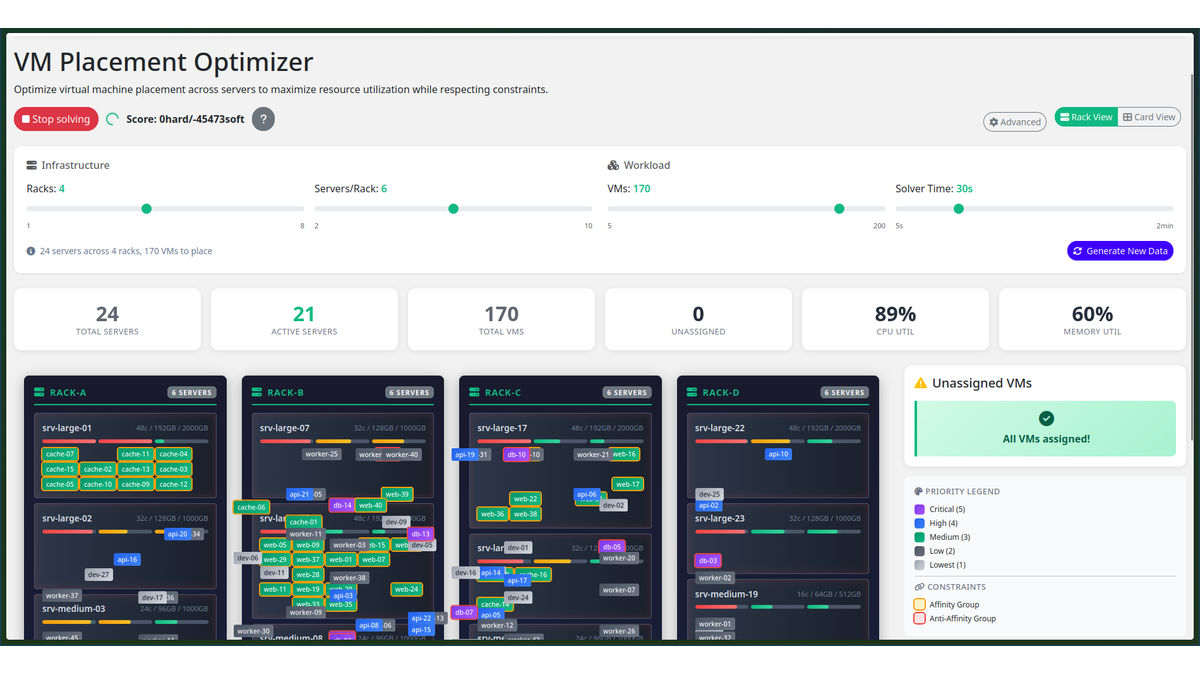
SolverForge Quickstart for the Virtual Machine Placement problem
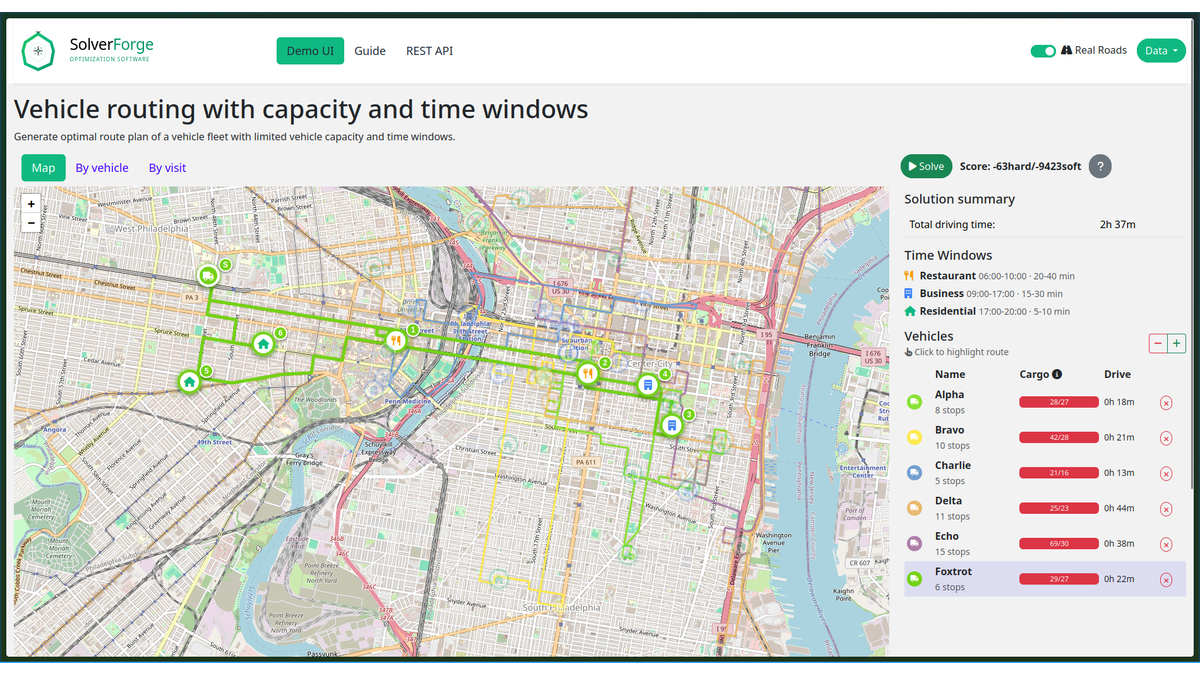
SolverForge Quickstart for the Vehicle Routing problem
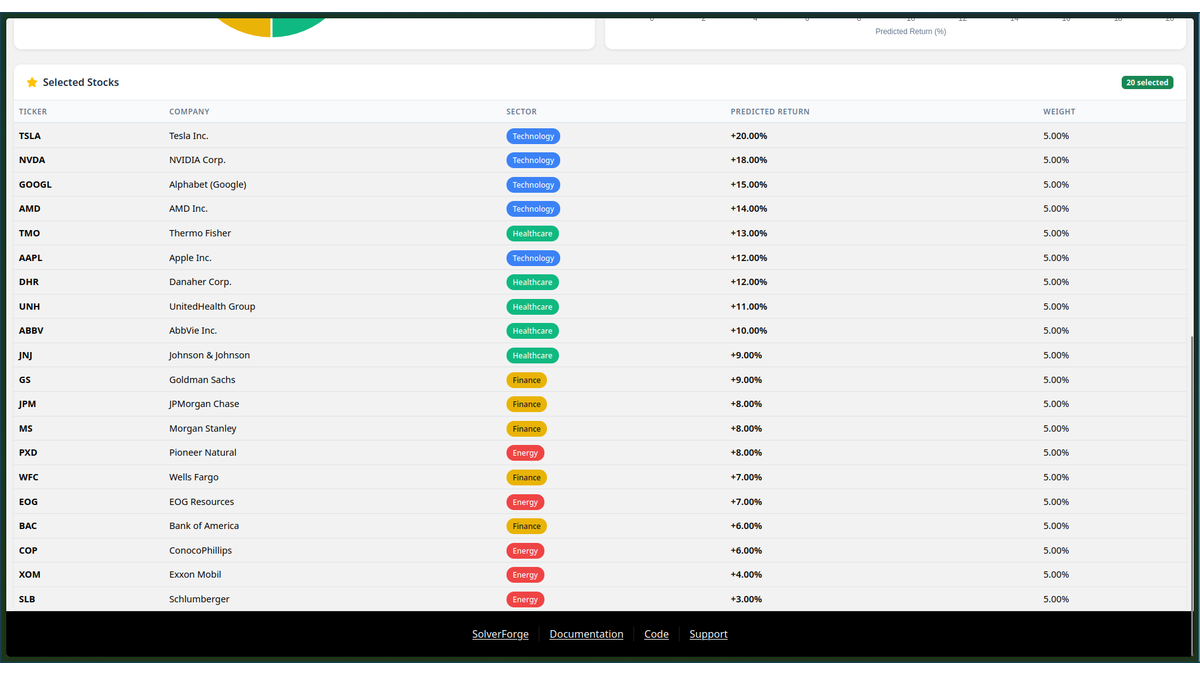
SolverForge Quickstart for the Portfolio Optimization problem
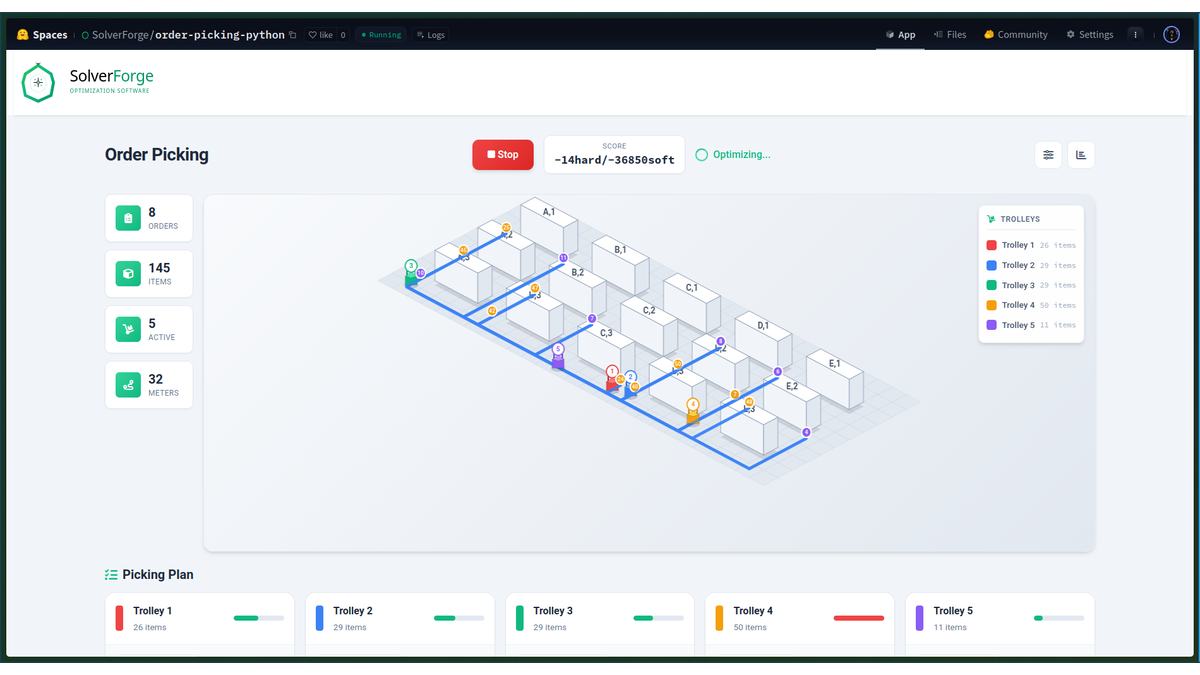
SolverForge Quickstart for the Order Picking problem
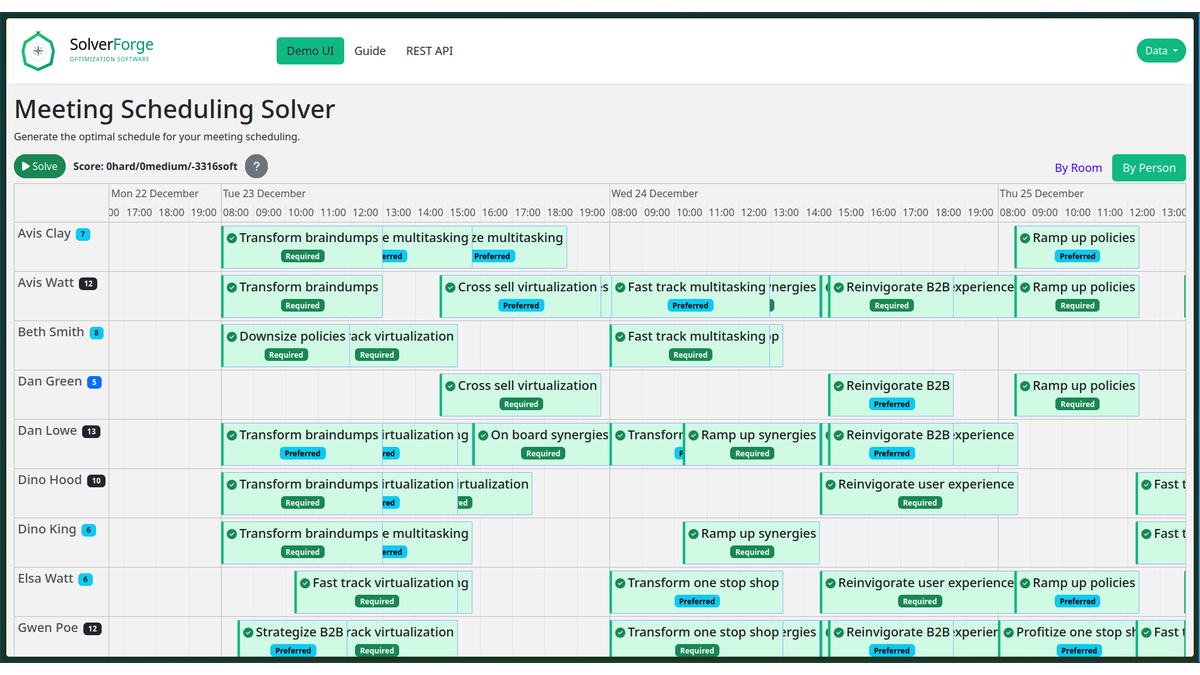
SolverForge Quickstart for the Meeting Scheduling problem
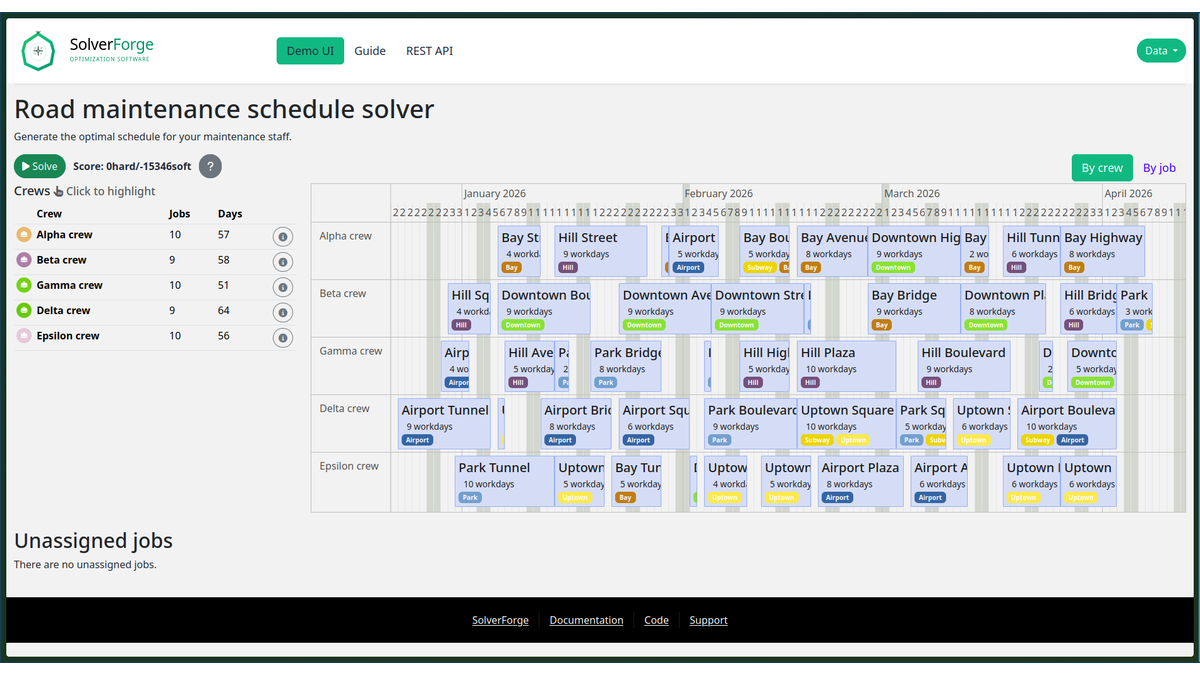
SolverForge Quickstart for the Maintenance Scheduling problem
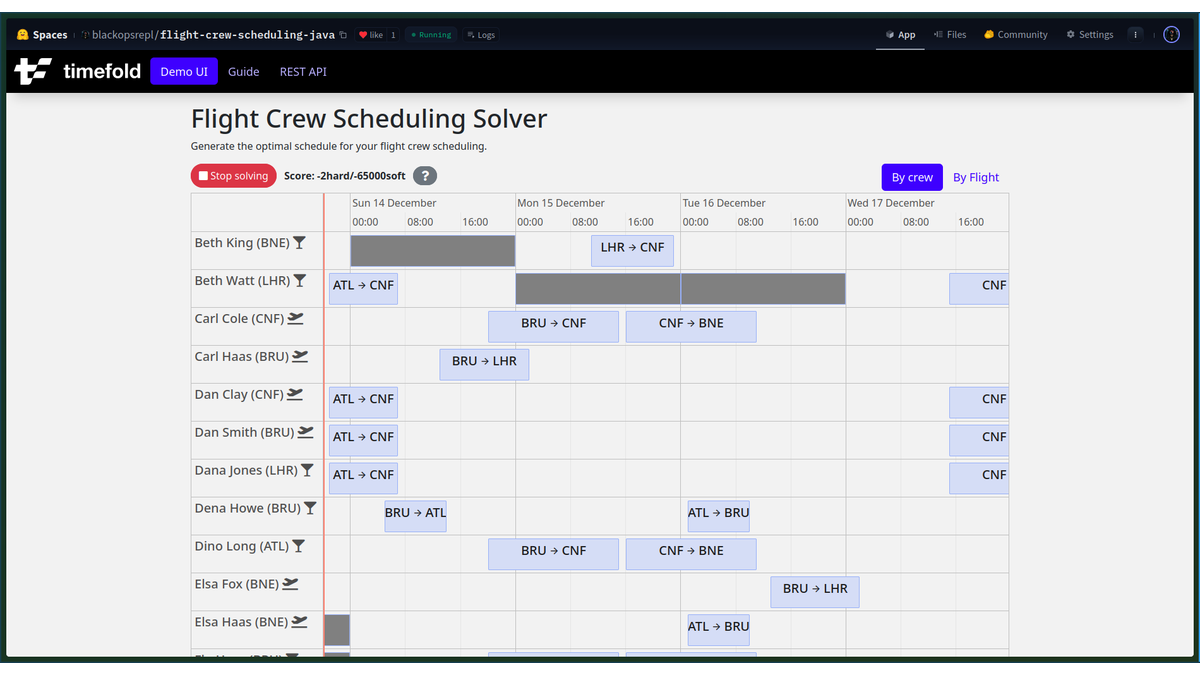
SolverForge Quickstart for Flight Crew Scheduling using Java
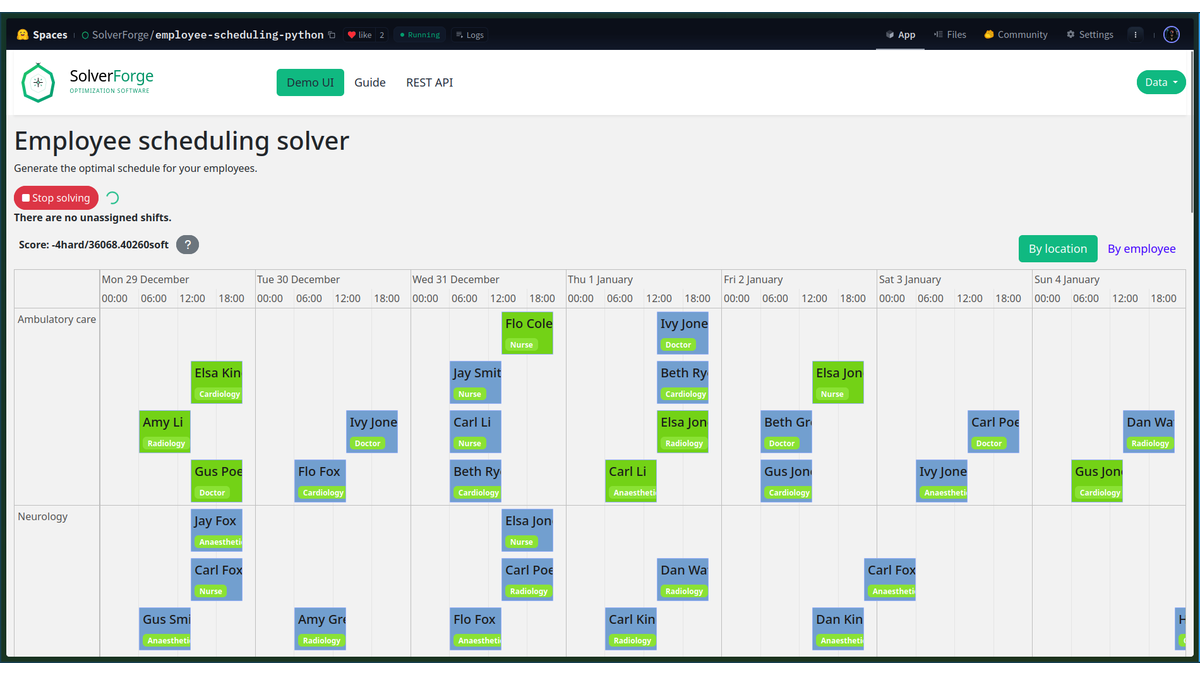
SolverForge Quickstart for the Employee Scheduling problem